CDACL is dedicated to advancing state-of-the-art materials characterization, driving strategic innovations in the field of materials science. Our work is made possible through transcontinental technical and scientific collaboration with renowned research centers, combined with the expertise and commitment of our specialized team.
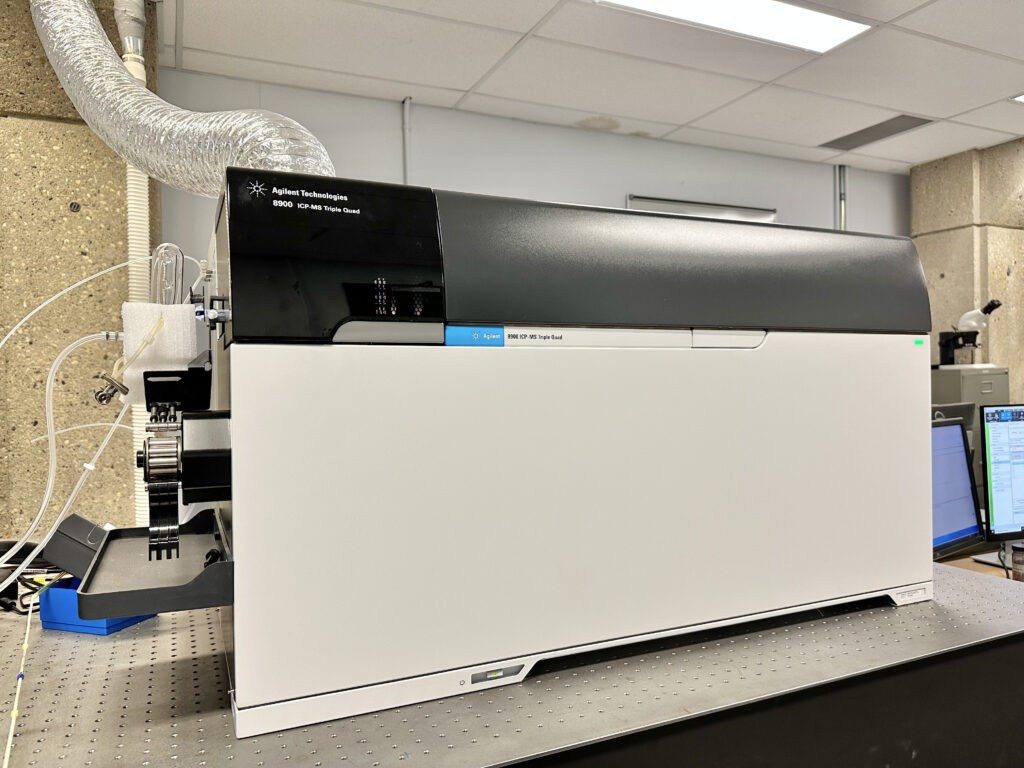
The Agilent 8900 triple quadrupole ICP-MS (ICP-QQQ) is the world’s most successful and widely used tandem ICP mass spectrometer. Available in a range of configurations to cover applications from routine contract analysis to advanced research and high-purity materials analysis, the Agilent 8900 ICP-QQQ redefines ICP-MS performance, delivering results you can trust.
The 8900 offers the same matrix tolerance and robustness as Agilent’s market-leading single quadrupole ICP-MS systems, combined with the industry’s most effective helium (He) collision mode. But the 8900 adds tandem mass spec operation (ICP-MS/MS) for unmatched control of reaction chemistry in the collision reaction cell (CRC), making it the world’s most powerful and flexible multi-element analyzer. Let the 8900 ICP-QQQ take control of your interferences and put your results beyond doubt.
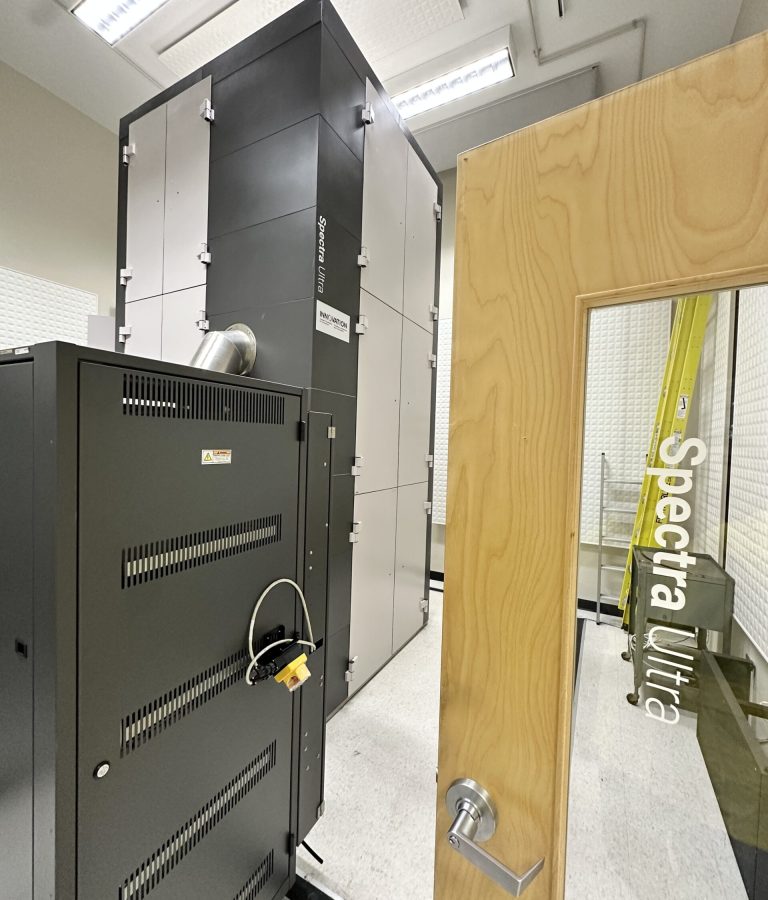
The TFS Spectra Ultra is an ultra-high-resolution, double-corrected HRTEM/STEM that operates at 30, 60, 200, and 300 kV. A X-FEG source and an ultimono monochromator (10 meV at 60 kV) and Ultra-X energy dispersive X-ray spectroscopy (EDS) detector makes this instrument well suited for high-energy-resolution analytical work down to single atoms.
Applications:
Well suited for high-energy-resolution analytical work down to single atoms.
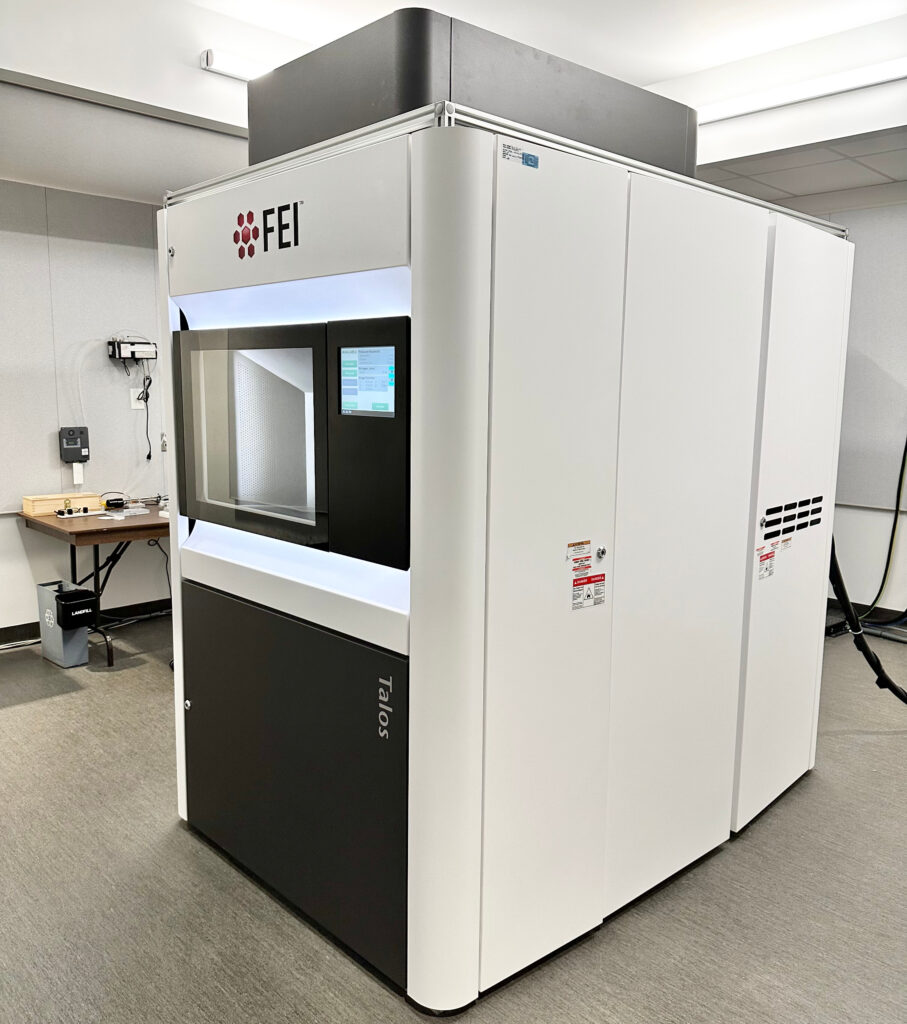
High-end, state of the art transmission electron microscope housing a variety of detectors in STEM mode including High Angle Annular Dark Field (HAADF) detector for Z- contrast images, Bright Field and Dark Field detectors, and Super EDX detector for chemical composition analysis and mapping at the nano scale. Talos holders include: Single tilt holder; Double tilt holder for diffraction analysis; and Tomography holder to construct 3D images or 3D EDS maps
Applications:
Talos TEM also equipped with a Hysitron PicoIndenter PI95 for in-situ nano mechanical testing inside a transmission electron microscope.
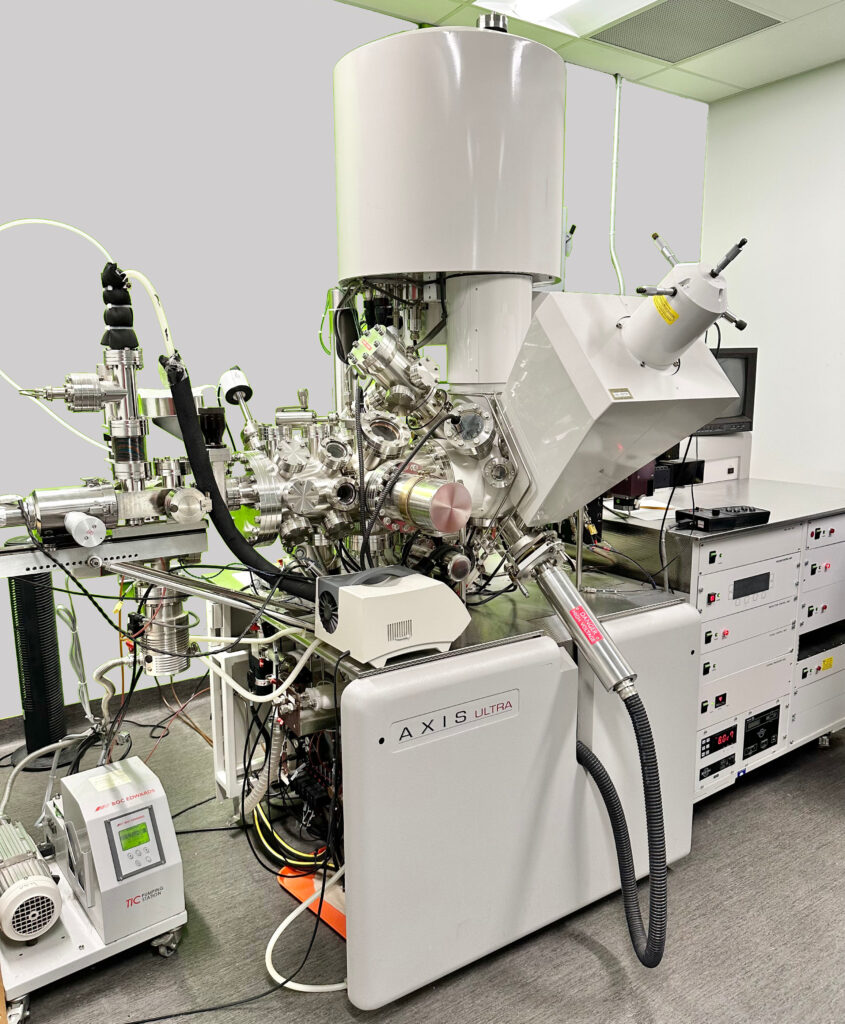
The AXIS Ultra is an X-ray photoelectron spectrometer that offers a combination of XPS imaging and spectroscopic capabilities. It also has an automated system for large sample handling.
The AXIS Ultra is an X-ray photoelectron spectrometer that offers a combination of XPS imaging and spectroscopic capabilities. It also has an automated system for large sample handling.
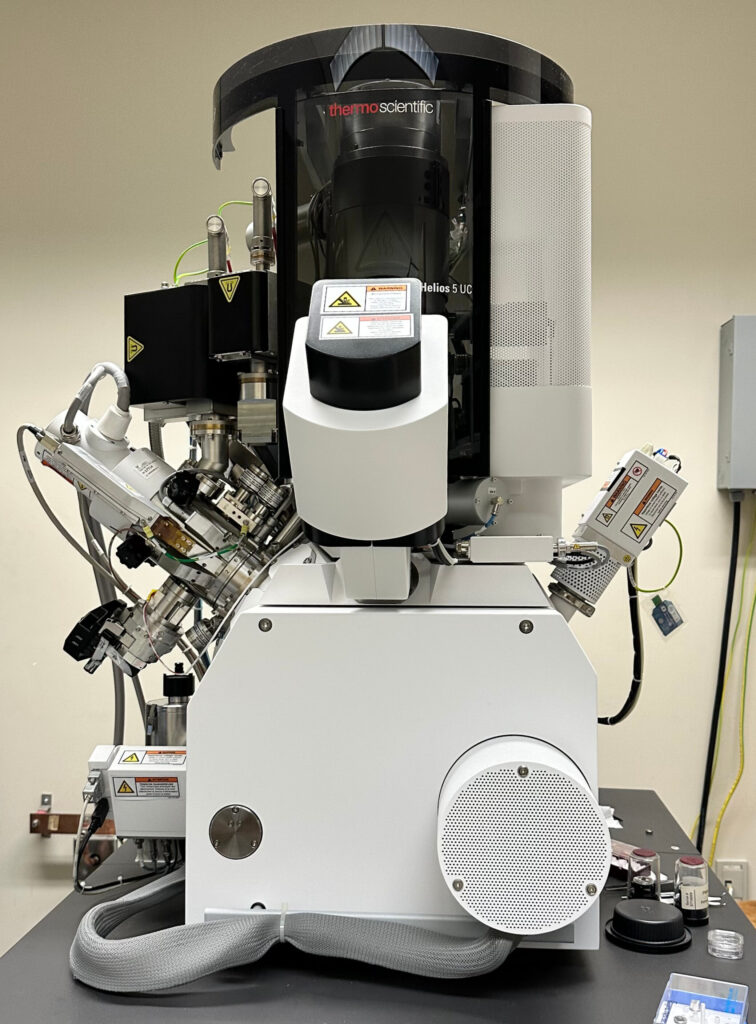
The Helios 5 is a modern workhorse FIB that CCEM has targeted to be used by both CCEM staff and users for efficiently performing typical FIB tasks such as cross-section analysis and sample preparation for TEM and atom probe tomography (APT). It is equipped with an assortment of detectors; Everhart– Thornley detector (ETD), through-the-lens detector (TLD), ion conversion and electron (ICE) detector, mirror detector (MD), and in-colunm detector (ICD); many with backscattered electron modes.
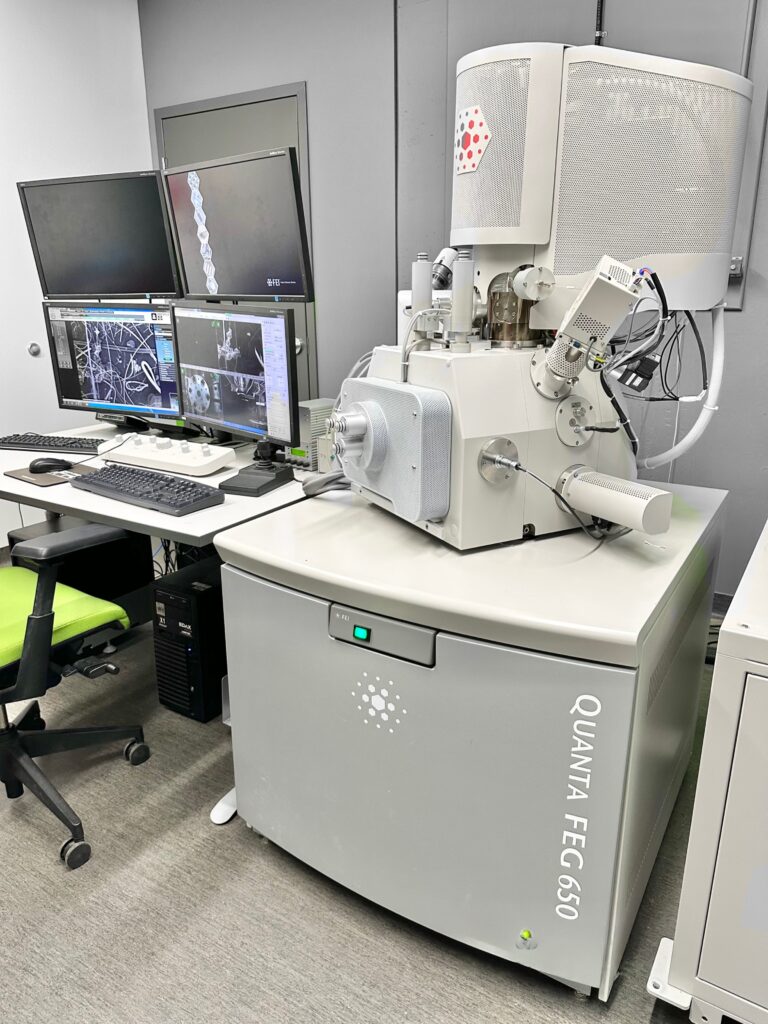
The Quanta 650 FEG is a variable pressure field emission scanning electron microscope for high-resolution imaging (SE, BSE) and X-ray microanalysis with low-vacuum capabilities for really challenging samples and dynamic experiments. It can be used for characterization, prototyping and in situ analysis of both conductive and non-conductive solid specimens at low and high temperatures. Attachments include:
Peltier Cooled Low Temperature Stage for in-situ experiments up to -20C
Two high Temperature Stages for high temperature in-situ experiments such as phase transformations up to 1000C and 1300C
Hysitron PicoIndenter PI85L for in-situ experiments to test mechanical properties at room temperature